<h2>Reflecting on the Future: Key Takeaways from the 14th Solutions in Supply Chain Conference</h2>
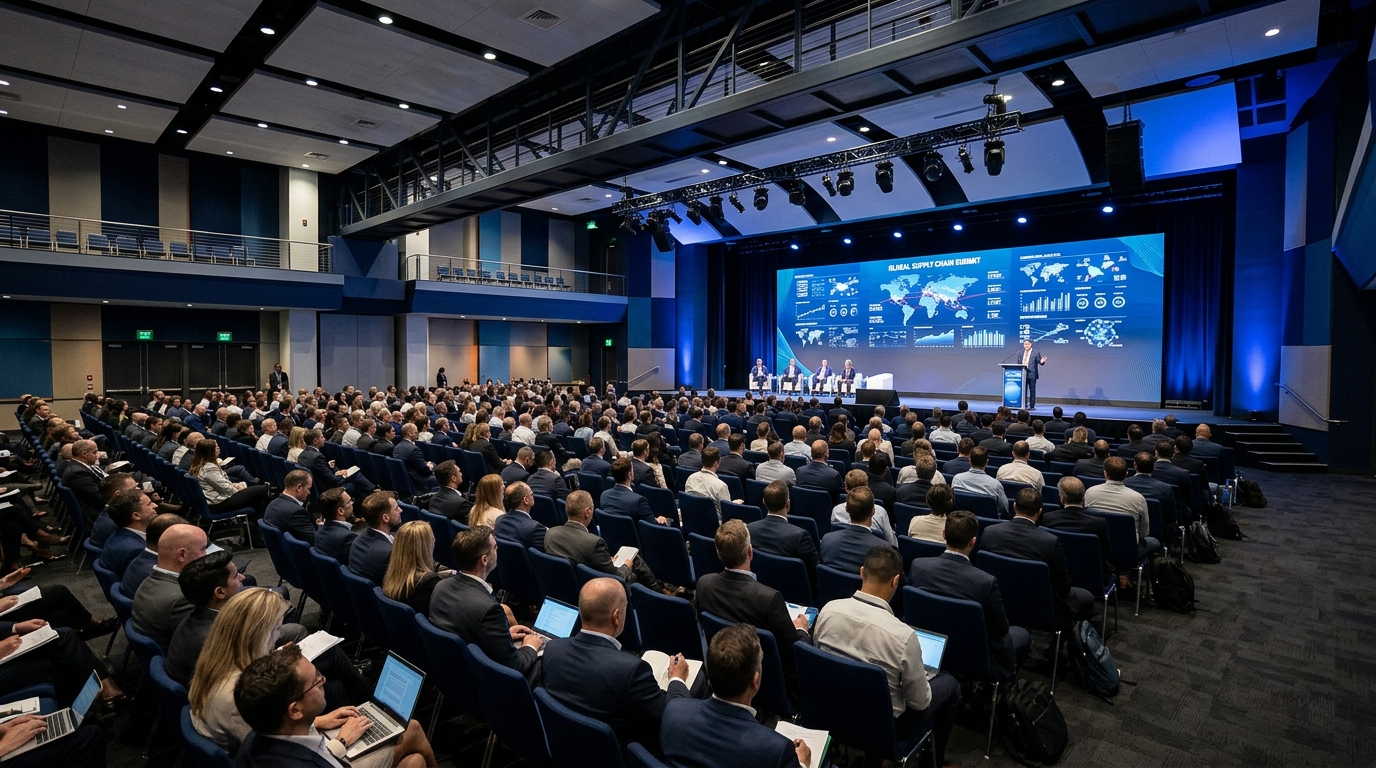
<p>Last week, the CIMA Software EMEA team, including our CEO Lefteris Catsaros, had the distinct pleasure of co-organizing and attending the 14th Solutions in Supply Chain Conference, expertly hosted by PwC Greece. The event was a vibrant hub for industry leaders, innovators, and forward-thinkers, all gathered to dissect the most pressing challenges and exciting opportunities facing the logistics and supply chain sector today.</p>
<p>Events like these are more than just a day out of the office; they are a vital pulse-check on the industry. They provide a space to exchange valuable insights, share real-world case studies, and collectively map out the road ahead. We extend our sincere thanks to PwC Greece for delivering such an impactful and well-organized conference that fostered collaboration and deep learning.</p>
<h3>Key Themes Shaping the Future of Logistics</h3>
<p>The conference floor was buzzing with conversations, but three core themes consistently emerged as the central pillars of our industry's ongoing evolution:</p>
<ul>
<li><strong>Supply Chain Digitalization:</strong> The comprehensive shift from analogue and siloed processes to integrated, data-driven digital ecosystems.</li>
<li><strong>The Role of Artificial Intelligence:</strong> Moving beyond the buzzword to understand the current and near-future applications of AI in creating smarter, more resilient supply chains.</li>
<li><strong>Greek Market-Specific Challenges:</strong> A focused look at the unique hurdles and opportunities within the local market, and how global trends apply within a regional context.</li>
</ul>
<p>These discussions weren't theoretical. They were grounded in practical application, exploring how companies can move from discussing transformation to actively implementing it.</p>
<h2>Why Digitalization Is No Longer Optional</h2>
<p>One of the most powerful messages from the conference was unequivocal: digitalization is no longer a source of competitive advantage, but a fundamental requirement for survival and growth. The days of managing complex logistics with spreadsheets, phone calls, and paper trails are drawing to a rapid close. For supply chain operators, embracing digital transformation is now a core business imperative.</p>
<p>Why the urgency? The reasons are multifaceted:</p>
<ul>
<li><strong>Visibility is Paramount:</strong> Customers, partners, and internal stakeholders now expect real-time visibility into every stage of the supply chain. Where is the shipment? When will it arrive? Are there any delays? Digital systems are the only way to provide these answers accurately and instantly.</li>
<li><strong>Efficiency is a Non-Negotiable:</strong> In a market with tight margins and intense competition, inefficiency is a liability. Manual processes are prone to error, create bottlenecks, and waste valuable resources. Digitalization automates workflows, reduces administrative overhead, and allows your team to focus on high-value tasks.</li>
<li><strong>Data-Driven Decision Making:</strong> Gut-feelings and historical anecdotes are no longer enough. Modern supply chains generate vast amounts of data. A digital framework is essential to capture, analyze, and transform this data into actionable insights that drive better strategic decisions.</li>
</ul>
<h2>The Practical Power of AI in Transportation Management</h2>
<p>If digitalization is the foundation, Artificial Intelligence (AI) is the smart technology we build upon it. The conference highlighted how AI is already moving from a futuristic concept to a practical tool that delivers tangible results in logistics and transportation.</p>
<h3>Route Optimization</h3>
<p>Traditional route planning is static. AI-powered route optimization, however, is dynamic and intelligent. It goes beyond finding the shortest distance, factoring in dozens of variables in real-time, such as traffic congestion, weather patterns, vehicle capacity, delivery time windows, and even driver-specific constraints. The result is not just reduced fuel costs and mileage, but also improved on-time delivery rates and greater fleet productivity.</p>
<h3>Predictive Analytics</h3>
<p>AI excels at identifying patterns in historical data to predict future outcomes. In logistics, this translates to powerful capabilities. For instance, predictive analytics can forecast potential delays before they happen, allowing for proactive communication with customers. It can predict vehicle maintenance needs, helping to prevent costly breakdowns and downtime. This shift from a reactive to a proactive operational model is transformative.</p>
<h3>Demand Forecasting</h3>
<p>Accurately forecasting demand is a long-standing challenge in the supply chain. AI algorithms can analyze complex datasets — including historical sales, seasonality, market trends, and even external factors like public holidays or promotional events — to produce far more accurate demand forecasts. This enables companies to optimize inventory levels, improve resource allocation, and enhance overall planning.</p>
<h2>Embracing the Transformation with Transporting24</h2>
<p>The insights from the PwC conference were both inspiring and challenging. For many companies, the question isn't <em>why</em> they should digitalize, but <em>how</em>. This is where the right technology partner becomes crucial.</p>
<p>At CIMA Software EMEA, we live and breathe these challenges daily. Our flagship product, the <strong>Transporting24 Transportation Management System (TMS)</strong>, is designed specifically to be the engine of this digital transformation for logistics and supply chain companies. It's not just a piece of software; it's a central platform that turns the concepts discussed at the conference into operational reality.</p>
<p>Transporting24 acts as the digital backbone for your transportation operations, providing the end-to-end visibility that today's market demands. Its intelligent routing and scheduling modules leverage smart algorithms to deliver the kind of dynamic optimization a modern fleet requires. Furthermore, the comprehensive analytics and reporting dashboard empowers you to make the data-driven decisions that are essential for staying competitive.</p>
<p>By unifying data, automating workflows, and providing powerful analytical tools, Transporting24 enables companies of all sizes to harness the power of digitalization and lay the groundwork for adopting more advanced AI-driven strategies.</p>
<h2>A Forward-Looking Perspective</h2>
<p>The 14th Solutions in Supply Chain Conference reinforced a critical reality: the future of logistics is connected, intelligent, and digital. The pace of change is accelerating, and the companies that thrive will be those that embrace technology not as a cost center, but as a strategic enabler.</p>
<p>As we move forward, the collaboration between technology providers, industry experts, and logistics operators will be more important than ever. At CIMA Software EMEA, we are committed to being more than just a software vendor; we are a partner in our clients' journey toward a more efficient, resilient, and future-proof supply chain. The conversations started at PwC Greece are ones we are excited to continue every day.</p>